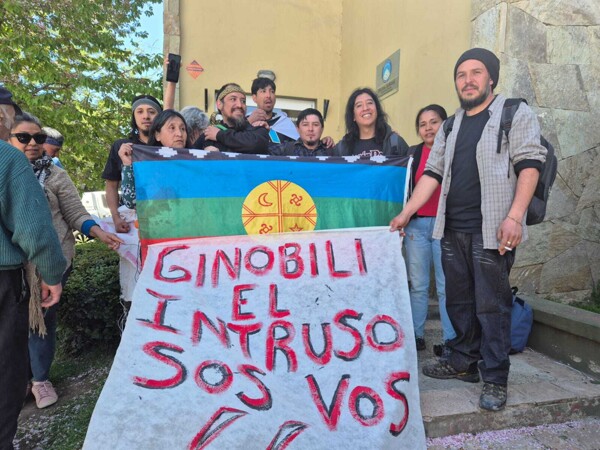
VILLA LA ANGOSTURA. The State effectively recognized the presence and knowledge of the Mapuche people, while simultaneously advancing in a process of appropriation that would later deny those same rights. The historical reconstruction that supports the territorial legitimacy of the Lof Paichil Antreao is based on letters, official documents, oral testimonies, and material remains. This way of producing knowledge challenges the State's and the elites' monopoly on historical truth and dismantles the version of the victors that legitimizes dispossession. The documentation gathered over more than fifteen years of research demonstrates that José María Paichil, along with Ignacio Antreao, was one of the original inhabitants of the territory currently in dispute in Villa La Angostura. Faced with the official narrative that presents these lands as "empty" or available for colonization, an alternative reconstruction emerges based on traces, documents, and testimonies that restore the Mapuche presence prior to the national State. That is to say, they not only knew the territory deeply, but this knowledge was used by the State itself in the demarcation of borders. In Villa La Angostura, as in so many other territories, the Mapuche struggle is not for a privilege, but for the recognition of a right that predates the State and has been systematically denied since its formation.
Paichil came from the community led by Namuncurá, son of Calfucurá, and arrived in the mountainous region fleeing the military advance of the Argentine State in the last decades of the 19th century. There are no hierarchies or single authorities: there is a shared research that functions as historical reparation and as a political exercise. His settlement near Lake Correntoso was not accidental or clandestine, but part of a Mapuche process of refuge and reterritorialization. Far from the figure of the "intruder," historical records show that Paichil was a baqueano (guide) for the boundary commission that worked in the area at the end of the 19th century. The research work references the figure of the tracker, taken up by Ricardo Piglia, but not from an individual intuition but from a collective reading of traces that power tried to erase. In this sense, the work on the Lof Paichil Antreao is built from a choral voice, a "we" that articulates the memories of the Mapuche community with the academic work of researchers and teachers. In this note, we invite you to read the joint research work between CONICET scientists and the Mapuche community.
Source: (Lof Paichil Antriao)
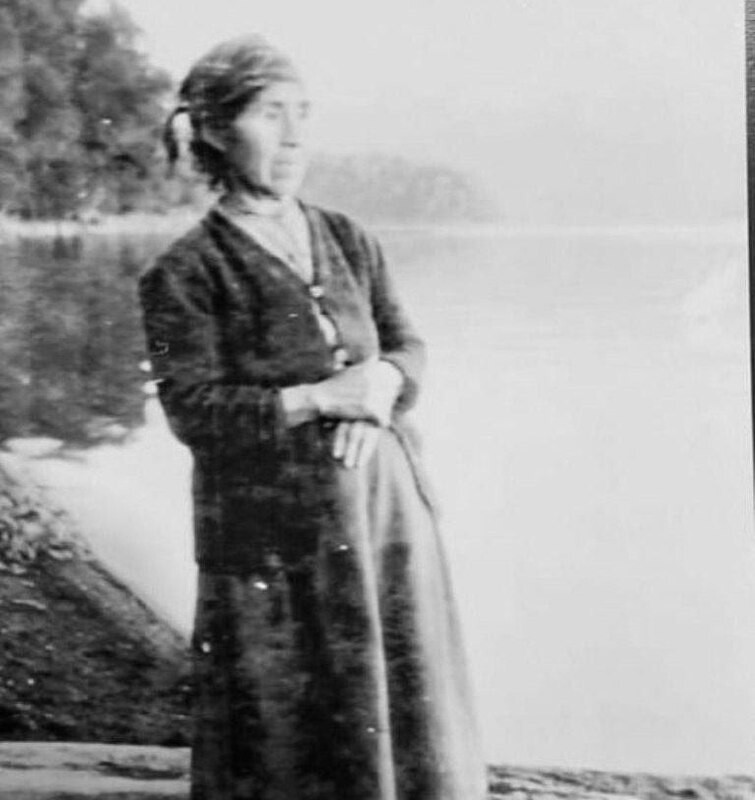
The history of the Lof Paichil Antreao in Villa La Angostura is inscribed in a profound dispute over memory, territory, and the very sense of historical research. It is about disputing the common sense constructed over decades and restoring a memory that power tried to bury. The hegemonic narrative not only falsifies history but also blocks the present by criminalizing indigenous demands. For this reason, asserting that the Lof Paichil Antreao is the ancestral owner of these lands is not a symbolic slogan, but a conclusion based on historical evidence. This set of evidence allows us to affirm that there was a systematic dispossession and that the subsequent concentration of land in private hands was sustained on a mystification of the past. Doña Carmen Rail, Lomas del Correntoso, circa 1930.